
Casino Legends Built on Reel Personas

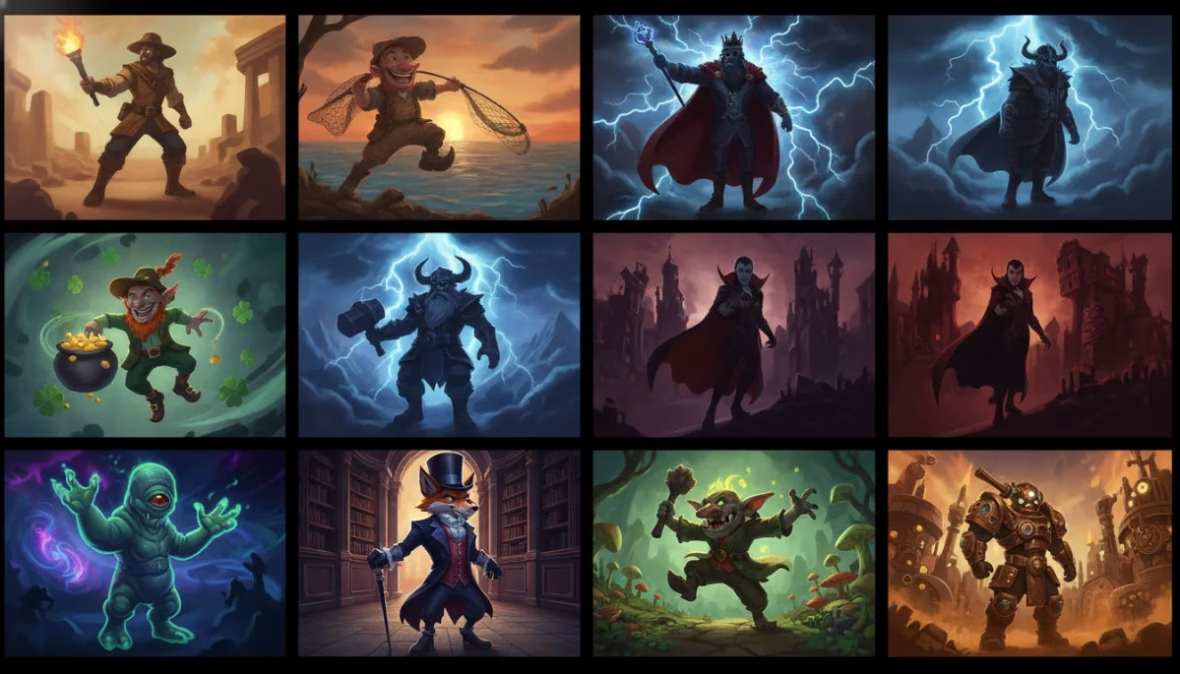
Modern slot games are often remembered less for their pay tables than for the personalities that carry them. A strong character can turn a one-off release into a long-running franchise, give bonus features a clearer identity, and make a game instantly recognisable to returning players.
That is why some of the best-known names in online casino gaming feel more like stars than symbols. They guide the theme, reinforce the mechanics, and give developers a shorthand for building sequels that players already understand.
The faces players remember first
Few slot characters have had the staying power of Rich Wilde, the globe-trotting treasure hunter from the Book of Dead line at Play’n GO. He works because he is instantly legible: he looks like a classic adventure hero, he fits the tomb-raiding setting, and his presence gives the series a sense of continuity that extends beyond a single title.
The Fisherman from Pragmatic Play’s Big Bass Bonanza series takes a very different route, but the result is similar. He is not there simply to decorate the reels; he becomes the visual cue for the fish-collecting bonus that defines the franchise, which is exactly why players associate him with free spins and cash-value symbols almost immediately.
Zeus, meanwhile, has become one of the most powerful mythological figures in modern slots. In Gates of Olympus, he hovers beside the grid and sends down multipliers that can dramatically change a spin, giving the game a sense of spectacle that matches its Greek setting.
Finn from NetEnt’s Finn and the Swirly Spin offers a lighter personality. He is a cheerful leprechaun whose animated reactions help frame the game’s unusual swirling reel structure, making the mechanics feel playful rather than technical.
Mr. Foxin brings aristocratic charm to the Foxin’ Wins family. His refined look and mansion setting set the tone, while the fox pups and Wild transformations give the character a functional role that goes well beyond branding.
How slot characters shape bonus design
Some of the most memorable characters are not memorable because they are flashy; they are memorable because they are useful. That is especially true of Gargoon in Play’n GO’s Reactoonz series. The alien creature sits beside the action until the Quantumeter fills, then lands on the grid as a large Wild, turning a visual mascot into a direct part of the game loop.
Thor has played a similar role for years in the Thunderstruck franchise. His presence helped establish Norse mythology as a major slot theme, and his return in sequels gave Microgaming, now part of Games Global, a dependable character with instant recognition value.
Sarah and Michael from Immortal Romance show how character work can support a more layered story. Their game does not rely on one mascot alone; instead, it uses a cast of vampires and humans, with each bonus path tied to a different character and mood. That structure gives the game a strong narrative rhythm and helps the feature set feel more deliberate.
Hugo the Troll is another example of a character with built-in nostalgia. Originally known from interactive television, he was adapted into slot form by Play’n GO and brought with him a ready-made audience that already associated him with games, mischief, and progression. Titles such as Hugo 2 and Hugo Carts extend that familiarity across multiple releases.
The Outlaws from Relax Gaming show the modern endpoint of this trend. Rather than centring on one hero, the Money Train series uses a crew of distinct modifiers such as The Collector, The Payer, The Sniper, and The Necromancer. Each one influences the bonus round in a different way, which makes the cast feel like a toolkit as much as a theme.
Why these characters became so influential
What links these games is not just visual style. Their characters are attached to mechanics that players can understand quickly, whether that means collecting symbols, adding multipliers, transforming into Wilds, or unlocking bonus stages. That connection matters because it turns a character into a functional memory trigger, not just a piece of art.
It also helps developers build franchises more efficiently. Once a player knows what Rich Wilde, Zeus, or The Fisherman represents, a sequel does not need to explain everything from scratch. The name, the look, and the mechanic already do part of the work.
If you are looking at the broader online casino market, this is one of the clearest reasons character-led design keeps expanding. Strong personalities make games easier to market, easier to remember, and easier to extend into new releases without losing identity.
In practice, that is why these ten characters continue to matter. They are not simply the most visible faces in slot gaming; they are also some of the clearest examples of how theme, feature design, and brand recognition can work together in a single product.


