
Baccarat Myths: Patterns Don’t Predict Wins

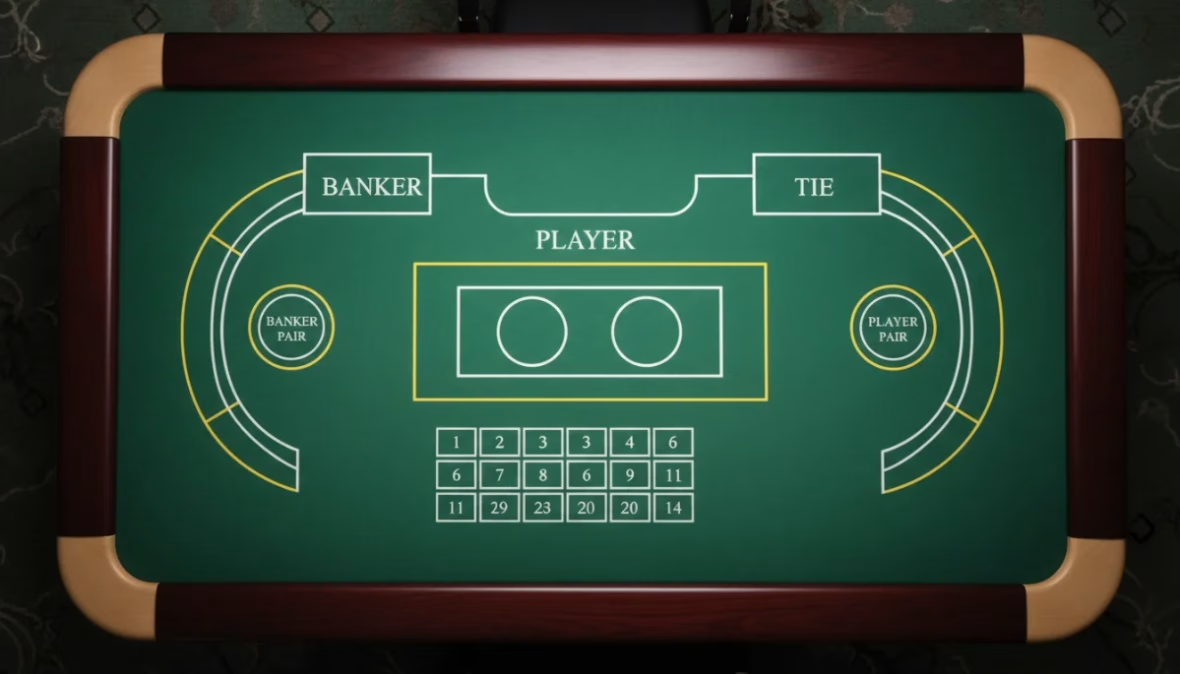
Baccarat players often track patterns on scorecards, believing they can forecast the next hand, but mathematics shows each outcome remains independent with fixed odds. This belief persists due to human tendencies and casino designs, yet it offers no edge over the house.
Understanding Baccarat’s Tracking Tools
In casinos or online live tables, baccarat stands out for its detailed result displays. Players receive scorecards to mark Banker, Player, or Tie outcomes. Overhead screens show formats like the bead plate, which lists results in a grid, or the big road, building columns for streaks.
Derived charts such as the big eye boy, small road, and cockroach pig analyse the big road for repetitions or changes. These tools make past results look structured, encouraging bets on supposed trends. In reality, they record history without influencing future draws from the shoe.
The Independence of Every Hand
Each baccarat hand uses cards from a six- or eight-deck shoe, making outcomes nearly independent. Removed cards slightly alter the deck, but the shift is too minor for practical prediction. Probabilities stay constant: about 45.86% for Banker, 44.62% for Player, and 9.52% for Tie.
- A streak of Bankers does not make Player more likely next.
- No “balancing” occurs; the shoe lacks memory.
- Past sequences hold no bearing on the immediate future.
This explains the gambler’s fallacy, where players expect reversals after runs. Randomness naturally includes clusters, fooling intuition into seeing meaning.
Why Brains Seek Patterns in Chance
Human evolution wired us to spot patterns for survival, like detecting threats or food cycles. Missing real patterns risked death, while false ones cost little. Today, this bias turns random baccarat results into imagined forecasts.
Studies confirm people underestimate streaks in true randomness. Casinos provide these displays to boost engagement, as players betting on “systems” wager more and linger longer. The tools accurately log results but imply false predictability.
Popular Systems and Their Flaws
Many strategies rely on patterns, yet they fail against fixed odds. Here’s a comparison of common approaches:
| System | Description | Core Assumption | Mathematical Issue |
|---|---|---|---|
| Martingale | Double bet after losses | Win is “due” after losses | Ignores house edge; bankroll limits cause ruin |
| Paroli | Raise on wins, reset on loss | Follow hot streaks | Variance allows short gains, but edge prevails |
| Trend Follow | Bet with recent results | Streaks continue | Independence makes trends unreliable |
| Trend Reverse | Bet against streaks | Reversals imminent | Fallacy; no correction mechanism |
These systems chase illusions. Progressive betting might yield temporary profits from luck, but over many hands, the house edge—1.06% on Banker after commission—ensures losses.
- Banker bet: Lowest edge at 1.06%.
- Player bet: 1.24% edge.
- Tie bet: High 14.36% edge despite payout.
Effective Ways to Play Baccarat
Ditching pattern myths shifts focus to real edges. Stick to Banker bets for the best odds. Avoid Tie and side bets, which carry steeper edges.
Bankroll discipline matters most:
- Set a session limit before playing.
- Define win and loss stops.
- Never chase losses with bigger bets.
- View it as paid entertainment, not income.
Baccarat’s appeal lies in its simplicity and pace. Tables offer a relaxed vibe without complex choices. Free from pattern pressure, players enjoy the flow, appreciating randomness rather than fighting it.
Patterns record the past but predict nothing. Grasping this leads to smarter choices based on probabilities and self-control, enhancing the experience without false hopes.


