
Milwaukee Turns a Four-Run Deficit into October History

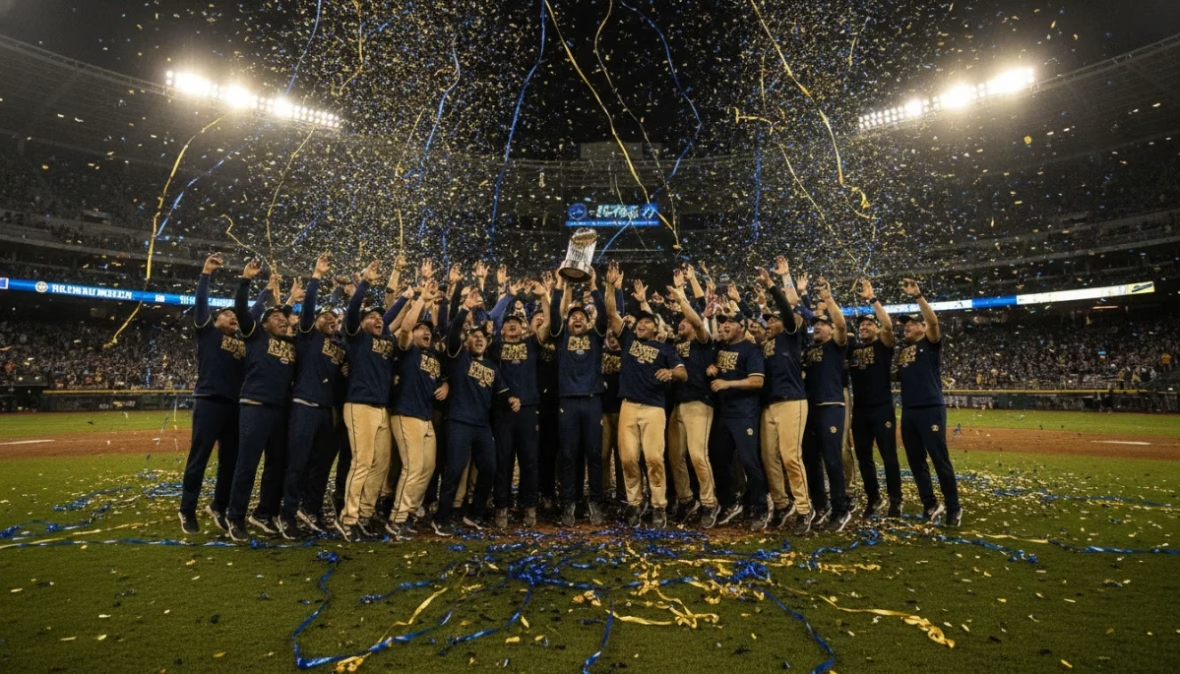
The Milwaukee Brewers are headed to the World Series for the first time since 1982 after producing one of the most memorable comebacks in franchise history. Facing the Los Angeles Dodgers at Dodger Stadium, Milwaukee erased a four-run disadvantage and won Game 4 of the National League Championship Series by a 6-4 score, completing a four-game sweep of the defending champions.
Game 1 of the World Series is scheduled for October 23 on FOX. The appearance will be only the second World Series trip in Brewers history and the first since the franchise played in the American League more than four decades ago.
A Comeback That Changed the Series
Los Angeles appeared to have control early, but Milwaukee gradually turned the game around with timely hitting, aggressive at-bats and a bullpen that refused to let the Dodgers regain momentum. The Brewers’ performance also ended Los Angeles’s attempt to reach a third consecutive World Series.
Garrett Mitchell delivered the decisive blow in the sixth inning, driving a solo home run that put Milwaukee ahead. David Hamilton later added valuable insurance with a ninth-inning homer, giving the Brewers enough breathing room for the final defensive stand.
- Milwaukee overcame a four-run deficit in the clinching game.
- The Brewers finished the NLCS with seven home runs, compared with one for Los Angeles.
- Mitchell’s sixth-inning homer supplied the lead the Dodgers could not recover.
- Hamilton’s ninth-inning blast strengthened Milwaukee’s advantage.
- Jackson Chourio caught the final fly ball on the left-field warning track.
Chourio’s catch ended the contest in dramatic fashion. As the ball travelled deep into left field, he tracked it down near the warning track and secured the out that sent Milwaukee players onto the field.
Brewers radio broadcaster Jeff Levering made the moment even more memorable. Having previously shared the booth with the late Bob Uecker, Levering announced Milwaukee’s pennant with an emotional call that echoed the club’s history and declared that the World Series would run through Wisconsin.
Christian Yelich Finally Clears the Dodgers
For Christian Yelich, the sweep carried an additional layer of meaning. Los Angeles had ended Milwaukee’s season three times during his tenure, including the 2018 NLCS, the 2020 postseason and a four-game NLCS sweep in 2025.
The 2025 defeat was especially painful because it occurred in the same visiting clubhouse where Yelich and his teammates celebrated after the latest victory. Rather than treating the new season as a continuation of the previous disappointment, Yelich repeatedly emphasized that the current Brewers were a different team with its own identity.
Milwaukee made that belief official during the season by naming Yelich captain. As the longest-serving hitter on the roster, he represented the club’s transition from a promising contender into a team capable of finishing the postseason job.
His path through October included several difficult endings against Los Angeles. In 2018, the Dodgers advanced after a Game 7 that included Chris Taylor’s important defensive catch in left field. The 2020 postseason brought another loss, followed by the 2025 sweep. The 2026 result finally reversed that pattern in emphatic fashion.
Power Arrived from an Unlikely Source
The Brewers did not build their regular-season success around home runs. Milwaukee finished tied for second last in the majors in homers, yet still scored the second-most runs in baseball. Their offence relied on extending innings, forcing difficult pitches and making pitchers work through one demanding plate appearance after another.
Outfielder Sal Frelick has described that approach as dragging opposing pitchers to hell. The phrase captures a club that wins through pressure rather than waiting for one swing to solve every problem.
That made the NLCS power display against Los Angeles particularly surprising. Milwaukee out-homered the Dodgers 7-1 during the four-game series, with Mitchell and Hamilton providing two of the most important long balls in the clincher.
The contrast with the 1982 Brewers is striking. That earlier club became known as “Harvey’s Wallbangers” after leading the majors in home runs. The current roster reached the same destination through a different formula, then unexpectedly added enough power to overwhelm one of baseball’s most dangerous line-ups.
A Remarkable Path Through 170 Games
The pennant came after Milwaukee’s 170th meaningful game of 2026. The Brewers had won 110 of those contests, combining record-setting regular-season work with two difficult playoff series.
- Milwaukee won 103 regular-season games, the best total in franchise history and the highest mark in the majors.
- The Brewers defeated San Diego three times in the NLDS after the Padres had posted baseball’s strongest record following the All-Star break.
- They then swept the Dodgers in four NLCS games.
The sweep also produced a piece of postseason history. Milwaukee became the first major-league team to be swept by an opponent in one postseason and then sweep that same opponent the following October. No previous club had answered a postseason sweep with a sweep of its own in that exact sequence.
The achievement reflects both resilience and sustained organizational strength. Over the previous 10 regular seasons, only the Dodgers, Astros and Yankees had better winning percentages than Milwaukee. Since Pat Murphy became manager three seasons ago, no team had won more often than the Brewers.
President of baseball operations Matt Arnold acknowledged the significance of the pennant but immediately shifted attention to the next challenge. Four more victories would give Milwaukee its first championship.
From a Difficult Rebuild to a Franchise Milestone
The Brewers’ turnaround was not guaranteed. After playoff appearances in 2008 and 2011, the organization entered a frustrating stretch that included a second-half collapse in 2014, a managerial change early in 2015 and significant turnover in both the roster and the front office.
During that period, a fan left a cake at the reception desk at what was then Miller Park after Milwaukee won a couple of games in early May. The blue-frosted message congratulated the team for no longer being the worst club in baseball. Team officials did not interpret the gesture as praise, although some staff members ate the cake anyway.
That memory now belongs to a very different organization. Assistant general manager Karl Mueller joined Milwaukee in 2004 as one of Ned Yost’s analytically inclined young scouts, studying players through VHS footage. He admitted that reaching the World Series was difficult to absorb after watching the franchise develop through so many uncertain periods.
Owner Mark Attanasio also recognized the distance travelled. His group purchased the Brewers before the 2005 season, immediately after the club had completed its 12th consecutive losing campaign. A .500 record in that first season felt extraordinary, while the 2008 Wild Card ended a 26-year postseason drought and seemed almost like a championship.
The Meaning Behind the Number 44
After Milwaukee won Game 3, Attanasio called 92-year-old franchise founder Bud Selig at 10:50 p.m. Central time. Selig was too energized to sleep and repeatedly described the team as remarkable.
The 44-year wait also connected the current achievement to Hank Aaron, who wore No. 44 during his two seasons in Milwaukee and hit the final home run of his career total of 755 fifty years ago. Aaron and Uecker later helped support efforts to build Miller Park and keep the team in Wisconsin’s smallest major-league media market.
Several plays throughout the postseason seemed to strengthen the feeling that the Brewers were living through an unusual October:
- Ty France’s fly ball struck the roof before landing in Chourio’s glove during NLDS Game 1.
- Mitchell made a deep catch on a Manny Machado drive to finish the NLDS.
- Jake Bauers, who had considered retirement in 2024 after his wife became pregnant, produced a breakout season at age 30 and delivered several crucial NLCS at-bats.
- Milwaukee became the first team to win six comeback games in its first eight postseason contests.
Supporters Followed the Team Across the Country
Brewers fans filled sections of Dodger Stadium and remained after the final out to watch the players receive the Warren C. Giles Trophy. The travelling support gave the celebration a distinctly Milwaukee feel, even thousands of kilometres from home.
Joe Stolarczyk watched Game 3 at Hog Creek Bar & Grill in Mosinee. Around 1 a.m., he decided to fly to Los Angeles for the clincher. When friends did not respond, his brother David Stolarczyk and sister Mary Pilz joined him. They purchased tickets while travelling toward a Minneapolis flight and reached seats behind home plate before batting practice ended.
Joe had been living in Alaska during Milwaukee’s 1982 run, making the trip an especially personal way to witness the franchise return to the World Series.
Dave Wuest of Atlanta and Murray Williams of Orange County also travelled for the game. The lifelong friends, who have known each other since kindergarten, still remember the disappointment of Milwaukee’s 1982 Game 7 loss to the St. Louis Cardinals.
Yelich called the visiting Brewers crowd electric. Milwaukee will need that same energy when the club begins its pursuit of the first World Series championship in franchise history.


